Showing posts with label Contextual Studies. Show all posts

Sunday, 10 November 2013

CS- More Research

     I have now received feedback on what I have written so for my Research Report. The good news is that I appear to be heading in the right direction with what I have done so far. The comparisons to fairytale in Django seems to be a strong area in which to begin my essay.
     One of my points which I have made change to since the feedback regards the flamboyant blue suit Django wears in the scene where he is whipping the slaver. I remembered reading about how this suit was featured in a famous painting "The blue boy".
Thomas Gainsborough 008.jpg
     I wanted to look at the subject of the painting as a way of exploring how further storytelling was emerging from the costumes used however research since has shown that there is mixed opinion on the identity of the character in the painting therefore I could not use it to support this argument effectively. In my feedback however we discussed the almost pantomime nature of the costume, and the fact that it is his choice to wear this garment. I am tying this in with the previous points in my essay comparing the deliberate humour of his costume choice to the extreme graphical violence.

     These types of contrasts are something I am looking at a lot in the form of Levi Straus's binary opposition. Particularly when flashback scenes are being used to contrast with the present situation.

     Whilst it is too old to have any reflection on Django, I have borrowed a book on Tarantino from the library "King Pulp".
This is useful for helping me to write my intro and plan some of the other chapters in my research report. I decided first that it was important to jot down the ideas for my other chapters so I could effectively build up to it within the intro. Most of my ideas for the other chapters have been influenced by the reading I have done when trying to find the initial direction for my essay.
      Chapter 2- Controversy
Controversy is often existent in Tarantino's work, usually due to violence or profanity. In a film like Django where huge focus is upon racial prejudice, we have the holy trinity of potentially offensive material. As such when researching the film it was easy to find many examples of complaint against these elements within the film. A strong example can be found here http://newsone.com/2150768/jamie-foxx-spike-lee/ where director Spike Lee speaks out against the film. rather than just identifying this kind of controversy I will be examining its relationship to the previous chapter and the reasons it has been included/effect it has had. I strongly suspect that, relating to the childish innocence/ extreme violence opposition uncovered in the fairytale chapter, these more "controversial" scenes make these contrasts that much more shocking to the audience- a pretty appropriate response when trying to convey the horror of the slave trade in this particular time period.

     Chapter 3- Genre Relationships
Tarantino places a huge amount of value in the history of cinema, with frequent references to previous films. In this chapter I will be dissecting other Western related media I believe may have inspired some areas of Django. Linking into chapter 2s discussion on controversy I will discuss how this was also a relevant feature within Red Dead Redemption, and how this can accompany publicity and marketing. Another important element of Django is humour. After my feedback session I was advised to look at the film blazing Saddles and compare some of the similarities between the two. Once again I will be identifying where Django may have been inspired by these other medias but also why this is important and what kind of effect it has.

     Chapter 4-Blaxploitation
Whilst my studio work and my research report don't really hold much relevance to each other, save for my film based essay and the lead inspiration game for my studio work being Max Payne, a particularly cinematic game. Howevever this is probably the only other area they cross over. Like with my cross culture examination of Afro Samurai for studio, Blaxploitation is also relevant in Django.  Tarantino has stated that he is a fan of the genre and that it has been the inspiration for previous character such as "Jules Winnfield" in Pulp fiction. My book "King Pulp" has been useful in supporting these statements within my essay. This kind of influence defininitely contributes to the aesthetics and style of a character, so for now I am looking at how making Django as "cool" or iconic a character as "Jules" or Issac Haye's "Shaft", Tarantino has created a character the audience admire and engage with. This I will argue makes his trials much more important and meaningful to us.


     I will make sure that my intro builds up to all of these in some way by mentioning Tarantino's frequent dabbling with Blaxploitation and controversy.
     I have also got hold of the copies of "Empire" and "Toatal Film" Magazine from when Django came out. Having given these a brief look I am not sure just how useful they will be for the completion of my first chapter on fairytale however I am sure they will come into play when it is time to complete my report in BA8
 Below are some of the references I have made use of for this stage of my essay

Boston Globe. 2009.Quentin Tarantino’s most fractured fairy tale. [ONLINE] Available at:http://www.boston.com/ae/movies/articles/2009/08/30/tarantinos_most_fractured_fairy_tale/. [Accessed 05 November 13].

IMDB. 2013.Quentin Tarantino. [ONLINE] Available at: http://www.imdb.com/name/nm0000233/?ref_=nv_sr_1. [Accessed 05 November 13].

Woods, P.A, 1996. King Pulp: The Wild World of Quentin Tarantino. 1st ed. London: Plexus Publishing.  


Wednesday, 6 November 2013

CS Research

     I am about 2/3 weeks away from the hand in for our cs work and so this week have been preparing my first draft version to be looked at. We have the option for our hand in to fully write a chapter of the essay and summarise the rest., or to do a more detailed summary of each chapter. In my mind it seemed more beneficial to use this first term to get a section of the essay to its completed standard, even though I can make changes for BA8, therefore I opted for the first choice. A very strong direction of my work so far has been the use of fairytale/folktale in "Django Unchained" and based on my research I had so much to say about it I considered that this should be the basis of my first chapter.
     This website http://elodieedjang.wordpress.com/essays/essay-one/ kickstarted a huge amount of the ideas I discussed within this first chapter. I began talking about visual references to fairytale in Django and other Tarnatino works such as "Inglourious Basterds".

Reminiscent to Cinderella, Landa finds von Hammersmark shoe
     These images are used to draw comparison to the story "Cinderella" where Prince Charming identifies Cinderella with her abandoned shoe, the Nazi officer from "Inglourious" in this scene identifies a woman in much the same manner.
Pictured left and center: Scenes from Basterds depicts the branding of the Swastika. An similar illustration of the Grimm’s Brothers’ version of Cinderella shows Cinderella’s step sisters eyes being gauged out by pigeons as punishment (right).
      These next images discuss this relationship further with the disfigurement of Nazis by Brad Pitts character in Inglourious being compared to the eye gouging of Cinderella's sisters in the Grimm's version of the tale. With both examples being a visible penance for the subjects misdeeds.
     This last example was particularly important to me as in Django there is a strong similarity within the "Mandingo" (slave fighting) scene where one slave is "punished" for his loss with the same eye gouging.


      Another visual reference to fairytales can be found in the use of intertitles within the films.
The opening scenes of the movie commence like most fairytales.


This gives the audience a sense of a story being told. In my essay I have begun to look out how the calming innocent effect of this fairytale structure is being used to create strong contrasts with the violence and horror of the film, which in turn amplifies the effect it has upon the audience.


     I have also been looking back at some of the work we did last year regarding narrative theory in folktale, such as Propp's action spheres. In order to properly comment on the relationship between these theories and the narrative structure of Django I have borrowed "Morphology of the Folktale" (V. Propp) from the Uni library.


     I have started to draw strong comparisons to the character functions found in Django, where Django is the hero, Dr King the donor, Broomhilda the princess etc. I have furthered this by showing how the folktale structure of characters is mirrored by a folktale told within Django itself by Dr King. This folktale happens to be the legend of "Seigfried and Brunhilde" (who represent Django and Broomhilda). The full story can be found here http://www.metoperafamily.org/metopera/history/stories/synopsis.aspx?customid=712

     I have also found a very good site here (http://www.latimes.com/entertainment/arts/culture/la-et-cm-django-unchained-siegfried-20130413,0,4870063.story#axzz2jFcyJqLc.) that compares Django and Seigfried further comparing villain "Calvin Candie's" imprisonment of Broomhilda in the hotbox to the dragons similar imprisonment of Bunhilde in the castle.

     This is about as far as I have taken my research at this point I have included my references here:

David Ng. 2013.'Django Unchained' pays homage to Wagner's 'Siegfried'. [ONLINE] Available at:http://www.latimes.com/entertainment/arts/culture/la-et-cm-django-unchained-siegfried-20130413,0,4870063.story#axzz2jFcyJqLc. [Accessed 18 November 13].

Jerome Magazine. Undated. TARANTINO’S FAIRYTALE: WHAT YOU DID NA-ZI, THE GRIMM TRUTH ABOUT INGLOURIOUS BASTERDS. [ONLINE] Available at: http://elodieedjang.wordpress.com/essays/essay-one/. [Accessed 05 November 13].

Metoperafamily. Undated Synopsis Siegfried. [ONLINE] Available at:http://www.metoperafamily.org/metopera/history/stories/synopsis.aspx?customid=712. [Accessed 06 November 13].

Propp, V, 1928.Morphology of the Folktale. 2nd ed. USA: The American Folklore Society and Indiana University .

Django Unchained, 2012. [DVD] Tarantino, USA: Columbia Pictures, The Weinstein Company

Inglourious Basterds, 2012. [DVD] Tarantino, USA/ Germany: Universal Pictures, The Weinstein Company, A Band Apart, Zehnte Babelsberg Film GmbH Production, Visiona Romantica

I will continue to add to my essay following its review by my tutor.


Tuesday, 29 October 2013

CS

     After some thought I decided that as I enjoy film as much as I do, it would be good to relate my research report to movies in some way, something along the lines of film/game adaptions was going through my mind. However on speaking to my tutors it was agreed that I would be able to focus on a film of my choice (I picked "Django Unchained". I decided my research report question would be something along the lines of "What are the film techniques used within Django Unchained, and what are their relevance to other media?"
     To prepare for our next cs session I began thinking about some of the areas I would start looking at. After some discussion with my tutors and some basic research on the film I came up with the following ideas.
Tarantino's use of fairytale:
-"Inglorious Basterds" relation to Cinderella, lost slipper, disfigurement as penance
-Disfigurement also appears in Django
-Both films use intertitles that set the scene in fairytale style eg. Once upon a time..
-Seigfried and Brynhilde legend told within film runs parallel to narrative, further more it also happens to be a German folktale
-Relationship to narrative theories- character functions/action spheres, Vogler's  Hero's journey, Levi Straus's Binary Opposition
-Song featuring in soundtrack tell separate stories themselves
Other possible areas of focus could include:
-Tarantino's controversy- publicity?
-Genre relationships, Blazing saddles (second link through use of humour), Red Dead Redemption (second link through controversy/publicity
-Blaxploitation as an inspiration for the film

This will give me some areas to focus on for my project. We also had a group tutorial where we were directed to various online sources that would help us find reference material. However a lot of these were game related so I have had to look elsewhere for more material. I have bought copies of both "Empire" and "Total Film" magazines (the Django editions) for any material they may produce.


Tuesday, 22 October 2013

Return to Uni

     After some debate on leaving this year I eventually decided to remain on the course and complete my final year. As we are already about three weeks into our first term this requires me to catch up a little. My first task is to decide what I will be doing for my projects.
    Contextual Studies this year will consist of a 5000 word (or 10,000 if we wish) research report upon an area of our choice. The BA7 portion of this is a started but not complete "draft" version. It has however been emphasized that the word draft does not mean that our arguments is in bullet point or note form, but just that the is more to be written or expanded upon.
     We will be working on one studio project for the entire year. There were several options for the area we wanted to explore, 3D environment/characters, user interface, level design, concept art and interactive narrative. The last one does take my interest however I do think it would be something I would rather explore in my own time. Therefore I am pretty sure I would like to continue looking at environmental assets. So far my ideas only go as far as some kind of pub/bar scene

Thursday, 16 May 2013

Contextual

     I was pretty late into the project before I could decide on an essay question this time round. My problem is that I usually enjoy the writing more if it is about something I am interested in, however even with such a diverse them, how games change the world, I cannot think of something of interest. I have decided to lean towards something about the way the military uses gaming. This was initially put in my head by a comment someone on our course made about Kinect for the Xbox being developed in the military initially.
      I started with just a few general searches relating to games in the military. One of the most prominent things to come up was "America's Army" a war game/simulation that was being used as a recruitment tool.

     This got me thinking about how else the military could be sing these simulations for training, recruitment and propaganda. This is likely a point that I will try to base the structure of my essay around.
     Another thing that stood out to me was the psychology aspect, one particular site http://www.springer.com/about+springer/media/springer+select?SGWID=0-11001-6-1152421-0This 

mentioned how gaming may be able to treat problems such as post traumatic stress disorder. I immediately contacted a friend who knows a psychiatrist in the hope of getting a first hand opinion on this matter.

Thursday, 2 May 2013

Contextual

     Since my last post I now have a much clearer idea of what I am doing for my essay. We have a scheduled meeting with our CS tutor Sharon tomorrow therefore I completed a draft version of my essay today ready to take in. I decided on the question "To what extent can gaming culture impact the military?" By saying gaming culture instead of just gaming it allows me to look at things such as transmedia and participatory culture , see Henry Jenkins TED talk http://www.youtube.com/watch?v=AFCLKa0XRlw, and how this can also impact the military. One particular example that stood out to me was the British army's "Start thinking soldier" campaign that combined a variety of advertising to lead audiences to an interactive quiz/simulation of battlefield events.


To summarise the points I look at within the essay:
     Training- to what extent can gaming be used to train soldiers. How can this save lives, equipment, environment and therefore improve public image
     Recruitment- How can gaming culture be used to draw peoples' interest to a career in the military, can this this cast a wider net to maximise recruiment and locate a new audience.
     Propanganda- The positive and negative effects when the military is seen to use gaming as an enticement for enrolling in the military, how the public percieves this.
      Public perception- should games be used to train to kill?
     Medical- How can gaming be used to treat those affected in the line of duty or even prepare them for future warfare.

     These are some of the sites I have found essential to the structure of my essay.

http://www.springer.com/about+springer/media/springer+select?SGWID=0-11001-6-1152421-0This 

http://www.guardian.co.uk/technology/2012/mar/18/video-games-propaganda-tools-military

http://www.youtube.com/watch?v=IvMZHrjfC_c

http://www.gameinformer.com/b/news/archive/2009/11/19/video-games-effective-form-of-recruitment-for-army.aspx

http://www.military.com/video/forces/military-training/military-training-via-video-games/2243219051001/

http://kotaku.com/5898342/us-government-turns-to-gamers-for-new-military-and-scientific-solutions

http://www.techradar.com/news/gaming/us-army-spends-32-8-million-on-propaganda-videogame-657121

http://www.g4tv.com/thefeed/blog/post/711092/homefront-and-propaganda-in-video-games-what-are-they-trying-to-tell-you/

    I was able to obtain first hand quotes as mentioned in my last contextual post, and these will be included within my essay however I will not be posting them on my blog.

Wednesday, 3 April 2013

Personal Statement

In our last CS session we were told to write our own 200 word personal statement ready for when we returned to uni. Here's what I've got:

"I took on games art and design because to me it seemed like the next level in art. Where a painting could visually describe a character to us and a film could tell us their story, a game goes one step further and can let us control that characters actions and narrate their story ourselves.
     I began as someone who's artwork consisted mainly of drawing, and who only really enjoyed character art. However game art has opened new interests for me and things such as environments, which I was reluctant to draw, are now enjoyable and far more fascinating to me within the world of 3D modelling.
     I like working on a project as part of a team and seeing how the constant reviewing and negotiating of ideas leads to the final result. However I also enjoy working alone and the freedom that comes with this, I tend to find my work most enjoyable when this is the case.
     Whilst it is great to have complete freedom, I feel my best work happens when constraints are applied. Whether this is a limit of time or subject matter, having to work whilst being judged under these parameters, encourages me more then anything else to create work that I can be proud of.


Thursday, 14 February 2013

Bye Bye Contextual

     I have now finished with my contextual studies, there was only a little left to finish off so this did not take long. I brought up one last theme within it which was how game saves have opened up a new type of mechanic. Here I looked particularly at games such as Prince of Persia and the indie classic Braid.

These titles have used in game memory to support a new style of gameplay where players can, or even must, backtrack in time to complete the level. Using game memory to innovate a completely new type of game mechanic definitely indicates that saving capability has changed the nature of gaming therefore this will definitely be included within my essay.

Contextual Studies Narrative

Another major theme I looked at for my contextual studies essay was the development of narrative with game saving. As players are no longer starting a game from scratch every time they turn the console on it has created long diverse narratives that can be progressed with each play.


     Games such as Fable and Mass Effect 3 are brilliant examples, with ME3 clocking up around 90 minutes of cut scene time, this would have been unfeasible to expect the audience to sit through every time they played a game, which is what would have to happen without game saving.


These two games and others such as Fallout 3 have opened up a new feature where players do not have to follow one linear path, but instead have multiple decisions, moral and tactical, to lead them upon their own unique personal narrative. This is possible and evident in some games before game saving but not anywhere near the extent we have now. Whats more these choices are all the more important when they are saved and not wiped away every time you turn the console off.
     A lot of this extended narrative has created the impression among audiences that games are becoming more and more like interactive movies or novels. I examine this in my essay using quotes from the following website which I feel has adressed this situation: http://themovieblog.com/2011/are-videogames-becoming-more-like-movies/

Wednesday, 13 February 2013

Contextual Studies

My contextual studies is pretty much written up already at this point, there is only a few touch ups to make to  it before it is handed in. Here I will look at some of the resources and themes that have helped build my essay.

"Crashing Computers" by Michael Coleman is a particularly informative book, a part of "The Knowledge" series, and a lot more useful then the front cover might suggest. A lot of the information I know about advances in gaming and computers in general came from this book. It explores the development of gaming through history, as well as the technology that supports it. Though I am yet to use it for direct quotes it will be referenced in my bibliography as the information it contains has supported and helped build many of the points I have made.

Cheats

I look in some depth at the changing role of cheats in games now that game saving is introduced. Something I learnt from the book above was that in the past game developers used to use cheats to skip to certain levels when they were testing them. Similarly people playing them could use these cheats to the same purpose. My point is that since this is no longer necessary with games saving cheats have taken on a new role. Sometimes making the game easier, though examples of this existed beforehand as well, but more interestingly cheats are  now quite often used just for fun. A fantastic example of this is "GTA: San Andreas". The full cheat list was far too big to list on here, however the following link shows you just how extensive this is: http://www.gta-sanandreas.com/buttoncheats/index.php I have listed just a few of these cheats below to give an idea.


Weapons Cheat (Tier 1)
Entering the following button combination will add the following weapons to the players inventory:
Brass Knuckles, Baseball Bat, Colt. 45, Chrome Shotgun, Micro Uzi, AK-47, Country Rifle, Rocket Launcher, Molotov Cocktails, Spray Can.
R1, R2, L1, R2, Left, Down, Right, Up, Left, Down, Right, Up


Weapons Cheat (Tier 2)
Entering the following button combination will add the following weapons to the players inventory:
Knife, Desert Eagle, Sawn Off Shotgun, Tec-9, M4, Sniper Rifle, Flamethrower, Grenades, Fire Extinguisher.
R1, R2, L1, R2, Left, Down, Right, Up, Left, Down, Down, Left

Weapons Cheat (Tier 3)
Entering the following button combination will add the following weapons to the players inventory:
Chainsaw, Silenced Colt. 45, Riot Shotgun, MP5, M4, Heat Seeking Missiles, Satchel Charges.
R1, R2, L1, R2, Left, Down, Right, Up, Left, Down, Down, Down

Money, Health and Armor
This cheat will give the player $250,000, full health and full armor. If entered while inside a vehicle it will lose all engine damage and it's model will be repaired to perfect condition.
R1, R2, L1, X, Left, Down, Right, Up, Left, Down, Right, Up

Spawn A Jetpack
Entering the following cheat will add a Jetpack to the players inventory.
Left, Right, L1, L2, R1, R2, Up, Down, Left, Right

Spawn A Parachute
Entering the following cheat will add a Parachute to the players inventory.
Left, Right, L1, L2, R1, R2, R2, Up, Down, Right, L1

Super Jump
This cheat will make the player jump about ten times higher than normal. Be warned though, you'll lose health from the fall.
Note: Cheat can be turned off by re-entering the button combination.
Up, Up, Triangle, Triangle, Up, Up, Left, Right, Square, R2, R2

Super Bunnyhop
This cheat will make bunny hops launch you hundreds of feet into the air. Just find a bike and hold L1 then release to bunny hop.
Note: Cheat can be turned off by re-entering the button combination.
Triangle, Square, Circle, Circle, Square, Circle, Circle, L1, L2, L2, R1, R2

Sunday, 10 February 2013

Contextual catch up.


We had a meeting last week with Sharon to discuss our contextual studies and how we have progressed so far with this. We were asked to evaluate what kind of essay we would need to write to suit our question. I decided mine was mostly a focus upon a change in industry but it would be required to mention how this has been made possible through changing technology, as I am focusing on the way that game saving has changed the nature of gaming.
     Some important points I am looking at are:
-Consoles with no saves eg.sega

-The mentality these were played with ie. short and snappy/time kill

-The difference now- long spanning story lines, previously impossible

-The use of pass codes cheats, returning to an achieved level vs. modern day cheats for fun. Such as the no gravity cheat for gta.                                                                                                      

- Autosaving
-Transfering game details to its sequel
-Game breaking through bad save choices

I have my ideas mapped out but I am yet to start the bulk of my writing therefore more work on this will be occuring and a rapid pace over the next couple of days.

Thursday, 22 November 2012

CS Update

     My contextual studies presentation is coming to a close. I have looked at the relevance of Proppian theory to the player's own narrative within open world games- and whether this changes with a non traditional setting.


     My three games I looked at are "Fallout 3", "Fable 3" and "GTA4". As mentioned in the presentation I deliberately picked open world games where the player has a choice of narrative or quest to follow. Without this I decided Proppian relevance depend simply on whoever wrote the game.
     I have also compared Propp theory in traditional folktales to the game examples in order to show where similarities can occur.
    Going over these features allows me identify what elements, if any, sustain the relevance of Proppian theory in modern games.
    In conclusion it came as some surprise to me that all three games conformed surprisingly well. To some extent the most contemporary of all three (GTA) turned out to harness similarities that even the more traditional (Fable) did not.
     I would have liked to spend more time on this cs project, I feel that along with some other members of the group, so much time and attention has been spent on the other project that I have neglected this somewhat. At the same time however I do feel I have some interesting points to talk about, and plenty to talk  about for the ten minutes I will be presenting. CS over.

Wednesday, 24 October 2012

Contextual Studies- Transmedia & Participatory Culture

     Here is the most recent update on our contextual studies sessions. We began the lesson by watching a TED, (Technology, Entertainment & Design), conference with guest speaker Henry Jenkins, linked here (http://www.youtube.com/watch?v=AFCLKa0XRlw). Here he speaks about "transmedia" and "participatory culture". Transmedia is described as the telling of a narrative across multiple digital platforms. One fantastic example brought up by Jenkins is the use of this within the "Matrix" franchise. Initially we have the three major films: "The Matrix", "Matrix Reloaded" and "Matrix Revolutions". On top of this you have "The Animatrix", a collection of nine animated shorts which one would have to watch to fully understand the introduction of certain events and characters between the main three films. The game "Enter the Matrix" offers fans the opportunity to explore some of the more minor characters of the series, particularly "Ghost" and "Niobe" who appear as playable characters. Another game "The Matrix Online" further informs the audience of events post "Matrix Revolutions". As if this wasn't enough the series also has its own collection of comics containing furthers stories that occur within the Matrix universe. The collection of images below from these various medias re-enforce Jenkin's point about the franchise being such a huge example of transmedia.
The Matrix Online Coverart.pngEnter the Matrix Coverart.png

     Participatory culture is when individuals, who can be considered part of the general public, extend from their role as consumers and also become contributors. The internet is considered to be a key factor in the growth of participatory culture, with technology and networking sites making it possible, and frankly pretty easy for people to share their interest and creations-whether these are in the form of photography, creative writing, film, music etc. Even blogs such as this can contribute to participatory culture. More information can be found here http://en.wikipedia.org/wiki/Participatory_culture
     On further research an issue that has been brought up with participatory culture is the digital divide, with people struggling to access decent technology being somewhat left out. With this technology getting more advanced and effective each year this divide becomes larger in intensity, but at the same time is decreasing in volume as the number of "technophobes" decreases.
       Whilst participatory culture and transmedia seems like an interesting subject to look at for cs, it seemed that it would probably be quite a popular choice with the rest of the class, I will bear this in mind when I pick my topic as I would prefer not to cross over with what someone else may be doing.

Thursday, 18 October 2012

Contextual `Studies- Spheres of Action

     I have yet to mention anything about our contextual studies sessions for this year. We have not been told what our final project will be for it yet but instead have been different themes for each lesson which will no doubt contribute to whatever we are expected to explore by the end of this term.
     This week we have been looking at Proppian theory in storytelling.
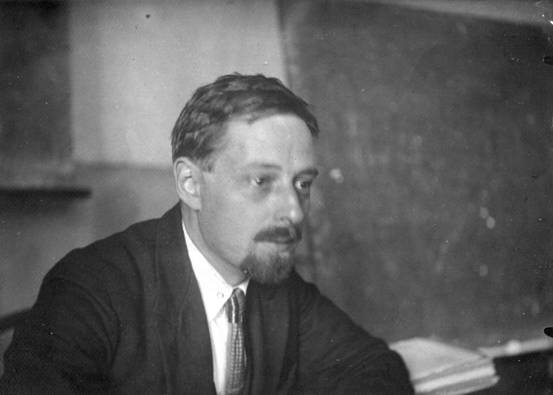
File:Vladimir Propp (1928 year).jpgVladmir Propp was a Russian scholar born in 1895 who studied, amongst other things, folklore and its morphology. He broke down different traditional fairytales into sections, and deduced that the sections had a number of "functions" that tended to appear consistently. These are as follows: "After the initial situation is depicted, the tale takes the following sequence of 31 functions:
  1. ABSENTATION: A member of a family leaves the security of the home environment. This may be the hero or some other member of the family that the hero will later need to rescue. This division of the cohesive family injects initial tension into the storyline. The hero may also be introduced here, often being shown as an ordinary person.
  2. INTERDICTION: An interdiction is addressed to the hero ('don't go there', 'don't do this'). The hero is warned against some action (given an 'interdiction').
  3. VIOLATION of INTERDICTION. The interdiction is violated (villain enters the tale). This generally proves to be a bad move and the villain enters the story, although not necessarily confronting the hero. Perhaps they are just a lurking presence or perhaps they attack the family whilst the hero is away.
  4. RECONNAISSANCE: The villain makes an attempt at reconnaissance (either villain tries to find the children/jewels etc.; or intended victim questions the villain). The villain (often in disguise) makes an active attempt at seeking information, for example searching for something valuable or trying to actively capture someone. They may speak with a member of the family who innocently divulges information. They may also seek to meet the hero, perhaps knowing already the hero is special in some way.
  5. DELIVERY: The villain gains information about the victim. The villain's seeking now pays off and he or she now acquires some form of information, often about the hero or victim. Other information can be gained, for example about a map or treasure location.
  6. TRICKERY: The villain attempts to deceive the victim to take possession of victim or victim's belongings (trickery; villain disguised, tries to win confidence of victim). The villain now presses further, often using the information gained in seeking to deceive the hero or victim in some way, perhaps appearing in disguise. This may include capture of the victim, getting the hero to give the villain something or persuading them that the villain is actually a friend and thereby gaining collaboration.
  7. COMPLICITY: Victim taken in by deception, unwittingly helping the enemy. The trickery of the villain now works and the hero or victim naively acts in a way that helps the villain. This may range from providing the villain with something (perhaps a map or magical weapon) to actively working against good people (perhaps the villain has persuaded the hero that these other people are actually bad).
  8. VILLAINY or LACK: Villain causes harm/injury to family member (by abduction, theft of magical agent, spoiling crops, plunders in other forms, causes a disappearance, expels someone, casts spell on someone, substitutes child etc., commits murder, imprisons/detains someone, threatens forced marriage, provides nightly torments); Alternatively, a member of family lacks something or desires something (magical potion etc.). There are two options for this function, either or both of which may appear in the story. In the first option, the villain causes some kind of harm, for example carrying away a victim or the desired magical object (which must be then be retrieved). In the second option, a sense of lack is identified, for example in the hero's family or within a community, whereby something is identified as lost or something becomes desirable for some reason, for example a magical object that will save people in some way.
  9. MEDIATION: Misfortune or lack is made known, (hero is dispatched, hears call for help etc./ alternative is that victimized hero is sent away, freed from imprisonment). The hero now discovers the act of villainy or lack, perhaps finding their family or community devastated or caught up in a state of anguish and woe.
  10. BEGINNING COUNTER-ACTION: Seeker agrees to, or decides upon counter-action. The hero now decides to act in a way that will resolve the lack, for example finding a needed magical item, rescuing those who are captured or otherwise defeating the villain. This is a defining moment for the hero as this is the decision that sets the course of future actions and by which a previously ordinary person takes on the mantle of heroism.
  11. DEPARTURE: Hero leaves home;
  12. FIRST FUNCTION OF THE DONOR: Hero is tested, interrogated, attacked etc., preparing the way for his/her receiving magical agent or helper (donor);
  13. HERO'S REACTION: Hero reacts to actions of future donor (withstands/fails the test, frees captive, reconciles disputants, performs service, uses adversary's powers against him);
  14. RECEIPT OF A MAGICAL AGENT: Hero acquires use of a magical agent (directly transferred, located, purchased, prepared, spontaneously appears, eaten/drunk, help offered by other characters);
  15. GUIDANCE: Hero is transferred, delivered or led to whereabouts of an object of the search;
  16. STRUGGLE: Hero and villain join in direct combat;
  17. BRANDING: Hero is branded (wounded/marked, receives ring or scarf);
  18. VICTORY: Villain is defeated (killed in combat, defeated in contest, killed while asleep, banished);
  19. LIQUIDATION: Initial misfortune or lack is resolved (object of search distributed, spell broken, slain person revived, captive freed);
  20. RETURN: Hero returns;
  21. PURSUIT: Hero is pursued (pursuer tries to kill, eat, undermine the hero);
  22. RESCUE: Hero is rescued from pursuit (obstacles delay pursuer, hero hides or is hidden, hero transforms unrecognisably, hero saved from attempt on his/her life);
  23. UNRECOGNIZED ARRIVAL: Hero unrecognized, arrives home or in another country;
  24. UNFOUNDED CLAIMS: False hero presents unfounded claims;
  25. DIFFICULT TASK: Difficult task proposed to the hero (trial by ordeal, riddles, test of strength/endurance, other tasks);
  26. SOLUTION: Task is resolved;
  27. RECOGNITION: Hero is recognized (by mark, brand, or thing given to him/her);
  28. EXPOSURE: False hero or villain is exposed;
  29. TRANSFIGURATION: Hero is given a new appearance (is made whole, handsome, new garments etc.);
  30. PUNISHMENT: Villain is punished;
  31. WEDDING: Hero marries and ascends the throne (is rewarded/promoted)."
     

Whilst we did not actually cover "functions" in our session we were introduced to Propp's book "Morphology of the Folktale" pictured below. Here we were informed of Propp's eight "broad characters" or as we referred to them "action spheres". Here Propp stated that the characters in the folktales he analysed could be split into eight categories

1) Villain- challenges the hero
2) Dispatcher- sends the hero off on his/her quest
3) Helper- possibly magical, aids hero in quest
4) Princess- hero's reward for completing quest, usually withheld from him/her until that point
5) Princesses's father- perhaps gives task to hero, Propp stated that the princess and her father are often indistinguishable in their function
6) Donor- aids/equips hero in preparation for task
7) The Hero- often protagonist of story, he who sets upon quest
8) False Hero- May try to steal princess or the hero's glory for himself

    It is worth mentioning that the definitions are not always literal. The princess may be a reward in the form of an object or treasure, likewise the helper could easily be a magical weapon or sidekick beast.

We were told to transfer what we have learnt to two games of our choice, but instead identify action spheres that were represented by the environment within game worlds. Our group decided to go with "Mirrors Edge" and "Little Big Planet". With LBP your entire world is endangered by a vacuum sucking the environment up. We decided that this in itself acts as a Dispatcher, if your character does not begin his quest he will be destroyed. It also doubles up as the Princess, by completing the game the Hero's world is saved, hence it is his reward. Your physical surroundings also act as a donor/helper as they provide abilities or equipment eg. a ledge you can climb up, to help you to your next stage.


We found a lot of similarities with action spheres in games and found it particularly difficult to find one hugely different. We went with "Mirrors Edge" eventually. To some extent the Villain and the Dispatcher are one and the same. An organisation that will try to kill you and at the same time, force you to keep moving. Other Villains can be found within the environment eg. crumbling ground, steep falls, that will certainly kill the character should she succumb to them. ME also use ledges as a helper upon the quest, but also it is worth pointing out a red colour scheme is applied to architecture the player is expected to interact with, and this two functions as a helper.
An asian woman's face occupies the foreground. She has two long black triangles extending from beneath her right eye, presumably tattoos. She is wearing a black shirt. The white buildings of a city are visible in the background, seen from altitude. The title "Mirror's Edge" lies within a red band that crosses the lower half of the image. Three production company logos are at the bottom of the image.

I have quite enjoyed looking at Propp's theories, which I feel familiar with having come across them before at college. At this point we are looking for themes that will eventually make up our final cs presentations, therefor I will be keeping Proppian theories in mind.


Sunday, 26 February 2012

Researching

     There hasn't been much posting on here recently about my upcoming essay for contextual studies. I am looking at the roles and practises of both concept artists and 3d modellers within today games industry. Below are some of the sites I used for research purposes.
     http://www.theaveragegamer.com/2011/06/24/friday-feature-you-dont-want-to-work-in-the-games-industry/
     http://www.businessweek.com/innovate/content/aug2007/id20070813_120384.htm
     I have also looked withing various games magazines, primarily "Xbox World" as well as referencing from our lecture with the artists from Crytek.

Wednesday, 25 January 2012

Jobs in the industry

As part of our contextual studies we were asked to research various roles within the games industry, focusing on two in particular. For a general overview of a large cross section of these roles I found the following webpage http://www.blitzgamesstudios.com/blitz_academy/job_roles/art to be particularly  helpful, and as such have sourced some of their information below.

3D Modeller and Texture Artist

3D Modeller & Texture Artist

3D Modeller & Texture Artist
As the name suggests, the 3D artist's working day consists of creating objects, characters and scenery in three dimensions. Most of this work will usually be achieved in one of the major 3D software packages, such as Maya, 3D Studio Max, Softimage XSI or Lightwave among others.

The artist usually works from a piece of concept art and creates the model (otherwise known as an art asset) from start to finish. This includes building the initial model, the creation and subsequent application of texture maps, the addition of project-specific blind data, and in some cases visual effects nodes, and even hardware graphics shaders. Though this all sounds rather daunting, the ability to model and texture well will get you through the door - after that the rest will come as you learn on the job.

Some companies make a job role separation between 3D Artist and 2D Texture Artist; however, most expect the 3D artists to complete the texturing phase as well as the modelling.


Technical Artist

Technical Artist

Bridging the gap between art and programming, the Technical Artist has emerged as a new team requirement in many progressive game companies.

The role can emerge from either the art or programming disciplines and works across both the aesthetics of the game and the underlying technology of the game engine and target platforms. The exact job description of a Technical Artist does vary from company to company but includes one or more of these roles: - plug-in creation / script creation / technical documentation / hardware shader creation / visual effects implementation / general art asset creation and trouble shooting.

Having the ability to write scripts and plug-ins in addition to normal artists' duties means that the Technical Artist is able to maintain and improve the production pipeline as well as the overall visual quality of the game. Most top-level Technical Artists also have an acute understanding of the target hardware and, in some cases, are able to write hardware shaders and do general programming in C or C++. This is an up-and-coming role that is currently highly desirable within the industry, due to the huge positive impact that a good Technical Artist can have on a project.


Visual Effects Artists

Visual Effects Artist

Another specialist area is special effects. This artist defines, creates and refines all special visual effects for the game. Strong skills in texture creation, coupled with an acute understanding of particle systems and geometry effects are key. Visual Effects Artists often have a good understanding of the technical restrictions of the target platform and will always work very closely with a programmer to create the effects.

Having a good level of target hardware knowledge really helps this role, as finding creative ways to produce striking and efficient visual effects separates the best from the rest. Additionally, the ability to technically deconstruct visual effects from other products helps to keep the team and company at the cutting edge as far as visual acuity is concerned.


Concept Artist

Concept Artist

When a new concept for a game asset or feature is required, it's the job of the Concept Artist to realise that concept in a visual form. Concept Artists usually draw a 2D image of the required asset, environment or character, which is then passed onto production and/or included in documentation.

The Concept Artist is responsible for envisioning and presenting the visual style of the game under the direction of the art or creative director. Superlative skills in draughtsmanship coupled with a vivid imagination and a range of styles are the keys to success. The best Concept Artists live to draw! Being able to draw and render well in traditional as well as digital media is a prerequisite, as well as having the ability to constantly refine your work and accept constructive criticism.

The Concept Artist has the freedom to define the look of a whole game, so accepts a great deal of the responsibility for the final look of the game. The Concept Artist role is a demanding, pressurised role that is offset by a great deal of creative freedom and reward.


GUI Artist

GUI Artist

Usually found in larger developers and publishers, GUI (graphic user interface - pronounced gooey) Artists usually stem from a graphic design background. Primarily responsible for menu systems and in-game 'score' elements, the GUI Artist must have good layout, graphics design and typographical skills. Many GUI Artists also have major input into the design and flow of the game's front end (menu system) and HUD (head up display).

Because the GUI is the first interactive visual element that a gamer will see in any game, it has to be engaging, clear and artistically excellent. GUI Artists have a lot of responsibility in this respect and therefore they are usually motivated and driven by the desire to produce great graphics.

With the earned ability to influence the flow of the front end, there is considerable responsibility as a poor front end can break a game.


Texture Artist

Texture Artist

Some companies separate the modelling and texturing job roles, which naturally means that some artists become experts in 2D texture creation and application.

Games rely very heavily on high quality texture mapping. The creation of these texture maps and their application has grown ever more complex as game art has steadily increased in quality. There are now so many different processes and applications available for creating and applying them that game artists can easily specialise in this area. The close relationship between model topology and texturing means that Texture Artists normally work very closely with 3D Modellers.

The increase in the use of hardware shaders on the new game platforms has also increased the demand for dedicated Texture Artists, especially those that have the technical ability to create and modify hardware shaders

     Out of these various potential careers, Concept artist and 3D modeller stand out to me in particular. Although I happen to know from general research and conversation within my course that conceptual artist is an exceptionally popular choice for a lot of people. Though we have only just begun using Maya in lessons I am enjoying what we are doing already, hence my interest in 3D modelling, however there are several processe named within its description that I do not fully understand therefore this will require further research. Also while programming itself deviates quite a lot from my interest in art, this is an area I am particularly inexperienced in and would certainly be interested in learning to become more adept at, whether or not I find myself using it much later on.