Wednesday, 24 October 2012

Contextual Studies- Transmedia & Participatory Culture

     Here is the most recent update on our contextual studies sessions. We began the lesson by watching a TED, (Technology, Entertainment & Design), conference with guest speaker Henry Jenkins, linked here (http://www.youtube.com/watch?v=AFCLKa0XRlw). Here he speaks about "transmedia" and "participatory culture". Transmedia is described as the telling of a narrative across multiple digital platforms. One fantastic example brought up by Jenkins is the use of this within the "Matrix" franchise. Initially we have the three major films: "The Matrix", "Matrix Reloaded" and "Matrix Revolutions". On top of this you have "The Animatrix", a collection of nine animated shorts which one would have to watch to fully understand the introduction of certain events and characters between the main three films. The game "Enter the Matrix" offers fans the opportunity to explore some of the more minor characters of the series, particularly "Ghost" and "Niobe" who appear as playable characters. Another game "The Matrix Online" further informs the audience of events post "Matrix Revolutions". As if this wasn't enough the series also has its own collection of comics containing furthers stories that occur within the Matrix universe. The collection of images below from these various medias re-enforce Jenkin's point about the franchise being such a huge example of transmedia.
The Matrix Online Coverart.pngEnter the Matrix Coverart.png

     Participatory culture is when individuals, who can be considered part of the general public, extend from their role as consumers and also become contributors. The internet is considered to be a key factor in the growth of participatory culture, with technology and networking sites making it possible, and frankly pretty easy for people to share their interest and creations-whether these are in the form of photography, creative writing, film, music etc. Even blogs such as this can contribute to participatory culture. More information can be found here http://en.wikipedia.org/wiki/Participatory_culture
     On further research an issue that has been brought up with participatory culture is the digital divide, with people struggling to access decent technology being somewhat left out. With this technology getting more advanced and effective each year this divide becomes larger in intensity, but at the same time is decreasing in volume as the number of "technophobes" decreases.
       Whilst participatory culture and transmedia seems like an interesting subject to look at for cs, it seemed that it would probably be quite a popular choice with the rest of the class, I will bear this in mind when I pick my topic as I would prefer not to cross over with what someone else may be doing.

Thursday, 18 October 2012

Contextual `Studies- Spheres of Action

     I have yet to mention anything about our contextual studies sessions for this year. We have not been told what our final project will be for it yet but instead have been different themes for each lesson which will no doubt contribute to whatever we are expected to explore by the end of this term.
     This week we have been looking at Proppian theory in storytelling.
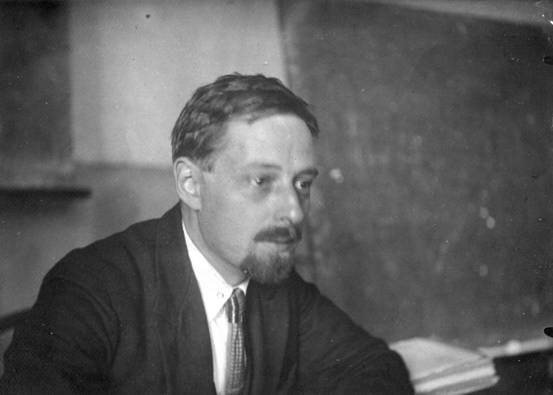
File:Vladimir Propp (1928 year).jpgVladmir Propp was a Russian scholar born in 1895 who studied, amongst other things, folklore and its morphology. He broke down different traditional fairytales into sections, and deduced that the sections had a number of "functions" that tended to appear consistently. These are as follows: "After the initial situation is depicted, the tale takes the following sequence of 31 functions:
  1. ABSENTATION: A member of a family leaves the security of the home environment. This may be the hero or some other member of the family that the hero will later need to rescue. This division of the cohesive family injects initial tension into the storyline. The hero may also be introduced here, often being shown as an ordinary person.
  2. INTERDICTION: An interdiction is addressed to the hero ('don't go there', 'don't do this'). The hero is warned against some action (given an 'interdiction').
  3. VIOLATION of INTERDICTION. The interdiction is violated (villain enters the tale). This generally proves to be a bad move and the villain enters the story, although not necessarily confronting the hero. Perhaps they are just a lurking presence or perhaps they attack the family whilst the hero is away.
  4. RECONNAISSANCE: The villain makes an attempt at reconnaissance (either villain tries to find the children/jewels etc.; or intended victim questions the villain). The villain (often in disguise) makes an active attempt at seeking information, for example searching for something valuable or trying to actively capture someone. They may speak with a member of the family who innocently divulges information. They may also seek to meet the hero, perhaps knowing already the hero is special in some way.
  5. DELIVERY: The villain gains information about the victim. The villain's seeking now pays off and he or she now acquires some form of information, often about the hero or victim. Other information can be gained, for example about a map or treasure location.
  6. TRICKERY: The villain attempts to deceive the victim to take possession of victim or victim's belongings (trickery; villain disguised, tries to win confidence of victim). The villain now presses further, often using the information gained in seeking to deceive the hero or victim in some way, perhaps appearing in disguise. This may include capture of the victim, getting the hero to give the villain something or persuading them that the villain is actually a friend and thereby gaining collaboration.
  7. COMPLICITY: Victim taken in by deception, unwittingly helping the enemy. The trickery of the villain now works and the hero or victim naively acts in a way that helps the villain. This may range from providing the villain with something (perhaps a map or magical weapon) to actively working against good people (perhaps the villain has persuaded the hero that these other people are actually bad).
  8. VILLAINY or LACK: Villain causes harm/injury to family member (by abduction, theft of magical agent, spoiling crops, plunders in other forms, causes a disappearance, expels someone, casts spell on someone, substitutes child etc., commits murder, imprisons/detains someone, threatens forced marriage, provides nightly torments); Alternatively, a member of family lacks something or desires something (magical potion etc.). There are two options for this function, either or both of which may appear in the story. In the first option, the villain causes some kind of harm, for example carrying away a victim or the desired magical object (which must be then be retrieved). In the second option, a sense of lack is identified, for example in the hero's family or within a community, whereby something is identified as lost or something becomes desirable for some reason, for example a magical object that will save people in some way.
  9. MEDIATION: Misfortune or lack is made known, (hero is dispatched, hears call for help etc./ alternative is that victimized hero is sent away, freed from imprisonment). The hero now discovers the act of villainy or lack, perhaps finding their family or community devastated or caught up in a state of anguish and woe.
  10. BEGINNING COUNTER-ACTION: Seeker agrees to, or decides upon counter-action. The hero now decides to act in a way that will resolve the lack, for example finding a needed magical item, rescuing those who are captured or otherwise defeating the villain. This is a defining moment for the hero as this is the decision that sets the course of future actions and by which a previously ordinary person takes on the mantle of heroism.
  11. DEPARTURE: Hero leaves home;
  12. FIRST FUNCTION OF THE DONOR: Hero is tested, interrogated, attacked etc., preparing the way for his/her receiving magical agent or helper (donor);
  13. HERO'S REACTION: Hero reacts to actions of future donor (withstands/fails the test, frees captive, reconciles disputants, performs service, uses adversary's powers against him);
  14. RECEIPT OF A MAGICAL AGENT: Hero acquires use of a magical agent (directly transferred, located, purchased, prepared, spontaneously appears, eaten/drunk, help offered by other characters);
  15. GUIDANCE: Hero is transferred, delivered or led to whereabouts of an object of the search;
  16. STRUGGLE: Hero and villain join in direct combat;
  17. BRANDING: Hero is branded (wounded/marked, receives ring or scarf);
  18. VICTORY: Villain is defeated (killed in combat, defeated in contest, killed while asleep, banished);
  19. LIQUIDATION: Initial misfortune or lack is resolved (object of search distributed, spell broken, slain person revived, captive freed);
  20. RETURN: Hero returns;
  21. PURSUIT: Hero is pursued (pursuer tries to kill, eat, undermine the hero);
  22. RESCUE: Hero is rescued from pursuit (obstacles delay pursuer, hero hides or is hidden, hero transforms unrecognisably, hero saved from attempt on his/her life);
  23. UNRECOGNIZED ARRIVAL: Hero unrecognized, arrives home or in another country;
  24. UNFOUNDED CLAIMS: False hero presents unfounded claims;
  25. DIFFICULT TASK: Difficult task proposed to the hero (trial by ordeal, riddles, test of strength/endurance, other tasks);
  26. SOLUTION: Task is resolved;
  27. RECOGNITION: Hero is recognized (by mark, brand, or thing given to him/her);
  28. EXPOSURE: False hero or villain is exposed;
  29. TRANSFIGURATION: Hero is given a new appearance (is made whole, handsome, new garments etc.);
  30. PUNISHMENT: Villain is punished;
  31. WEDDING: Hero marries and ascends the throne (is rewarded/promoted)."
     

Whilst we did not actually cover "functions" in our session we were introduced to Propp's book "Morphology of the Folktale" pictured below. Here we were informed of Propp's eight "broad characters" or as we referred to them "action spheres". Here Propp stated that the characters in the folktales he analysed could be split into eight categories

1) Villain- challenges the hero
2) Dispatcher- sends the hero off on his/her quest
3) Helper- possibly magical, aids hero in quest
4) Princess- hero's reward for completing quest, usually withheld from him/her until that point
5) Princesses's father- perhaps gives task to hero, Propp stated that the princess and her father are often indistinguishable in their function
6) Donor- aids/equips hero in preparation for task
7) The Hero- often protagonist of story, he who sets upon quest
8) False Hero- May try to steal princess or the hero's glory for himself

    It is worth mentioning that the definitions are not always literal. The princess may be a reward in the form of an object or treasure, likewise the helper could easily be a magical weapon or sidekick beast.

We were told to transfer what we have learnt to two games of our choice, but instead identify action spheres that were represented by the environment within game worlds. Our group decided to go with "Mirrors Edge" and "Little Big Planet". With LBP your entire world is endangered by a vacuum sucking the environment up. We decided that this in itself acts as a Dispatcher, if your character does not begin his quest he will be destroyed. It also doubles up as the Princess, by completing the game the Hero's world is saved, hence it is his reward. Your physical surroundings also act as a donor/helper as they provide abilities or equipment eg. a ledge you can climb up, to help you to your next stage.


We found a lot of similarities with action spheres in games and found it particularly difficult to find one hugely different. We went with "Mirrors Edge" eventually. To some extent the Villain and the Dispatcher are one and the same. An organisation that will try to kill you and at the same time, force you to keep moving. Other Villains can be found within the environment eg. crumbling ground, steep falls, that will certainly kill the character should she succumb to them. ME also use ledges as a helper upon the quest, but also it is worth pointing out a red colour scheme is applied to architecture the player is expected to interact with, and this two functions as a helper.
An asian woman's face occupies the foreground. She has two long black triangles extending from beneath her right eye, presumably tattoos. She is wearing a black shirt. The white buildings of a city are visible in the background, seen from altitude. The title "Mirror's Edge" lies within a red band that crosses the lower half of the image. Three production company logos are at the bottom of the image.

I have quite enjoyed looking at Propp's theories, which I feel familiar with having come across them before at college. At this point we are looking for themes that will eventually make up our final cs presentations, therefor I will be keeping Proppian theories in mind.


Wednesday, 17 October 2012

Lean Green Machine.

     This is my latest 2D work. He's called Norman and he wants to be your friend. He likes interpretive dance, puppets, getting to know you, and clubbing passers by to death. He will alienate you from your friends and family, however he does compensate for this by being powerfully overbearing and invasive to your personal space.


     I have deliberately chosen to include metal and fabric in this piece purely so I can familiarise myself with painting these texture, whereas I may have avoided them in the past. I brought this piece into our most recent 2D drop in session for advice on where I may be going right or wrong and was picked up on several issues included a descrepency in lighting, and anatomy.


I used Tom Hardy's impressive physique in "The Warrior" as a starting inspiration for my character. As you can see in the pictures the trapezius muscles (between the shoulder and neck) are extremely pumped up and something of a focal point. When being advised on my image it was pointed out that I havn't used the lighting as effectively to define these muscles. Furthermore the positioning of the hands is somwhat awkard and therefore also needs revising. Progress on this to follow...

Introduction to main project

      Initially we were given a choice of five different games including "Medal of Honor", "Fatal Frames", "Flow" and "Moshi Monsters". Our group quickly decided on picking either of the first two and decided to spend a day researching both before we made our decision.

Fatal Frames: 
A survival horror that also goes by "Project Zero" in Europe, "Fatal Frames" use a camera "weapon" as a method for dealing with enemies within the game. Were we to use it as our inspiration the camera or something reminiscent of it would be something that we should utilise within our own version.


     The game is very much focused on creating horror through vulnerability. As such you play as a young girl, whilst your ability to see the enemies that attck you is limited without the aid of your camera- which in itself is a pretty inoffensive weapon.

Medal of Honor:


Medal of Honor is a FPS series that has used WWII frequently as its setting. The game carries a strong element of realism and this is an important part of the player experience. Therefore this is re-enforced by making everything from weapons, vehicles, geography and history as credible and/or historically accurate as possible. Our group seemed to favour this as an influence for our game, whilst bearing in mind that this storng sense of realism would enforce the need for heavy research into our chosen setting.
 
After some deliberation we decided on Medal of Honor as our chosen game. We decided that the German invasion of Britain would be a poignant and so far relatively unexplored plot structure. Our next step was heavy research into the factors that would make an invasion possible, and realistically how this would affect us in the UK. From hereon this process will be named "Project Sealion", it is classified top secret and any attempt to divulge information on it may be punishable by death.

Tuesday, 16 October 2012

New year

      As usual slightly delayed posting on here. We are now back at uni for our second year and although the poor dedication to blogging may contradict this, I am determined to make this year more productive. We already have a main project set, the creation of a pitch and design doc for our own reinterpretation of a pre- existing game. In the first week of contextual studies we were also given a game genre to research and present. Examples of work relating to these projects to follow.

Sunday, 13 May 2012

A most relieved update. But its still not going right!

     Ok so here's the score. I managed to get a friend on the course, namely Robin Silcock, to do the render views on her (working) version of maya. I managed to sort out my texture at the same time and eventually found a code that allowed me to do render views on my (broken) version of Maya. So I had working lights models and textures. The process distorted my door somehow along the way but i pinched an earlier copy so its all good.

     I kind of like it it took long enough.

The main issue now is that when I try to render my vid, it comes out particularly stuttery. I have attempted different cameras, angles, distances, frame rates, directions etc. with no real solution. Having looked it up on the internet and checked my file size, I think it may be that the file is excessively large, however I have no clue as to why this would be the case and how to solve it. So unless I am able to work something out I am simply picking the best version I can find. My project folder is also being submitted so it is thankfully possible to view the model outside of the video as well.

     I have found a solution to the stuttering via windows movie maker, however I am struggling to make my video do the full turntable, it is not playing the same amount that it does before I import it.
I have even imported a what should be a full 360 rotation, only to find it barely does a quarter turn. Im sure the problem is fairly basic, and I intend to find out where I was going wrong, but for now I have spent a lot of time trying to fix this and seem to be getting nowhere so I will just have to submit the video as it comes. Luckily I do have my project folders so my work can at least be viewed properly that way.
      With foresight I would have opened up the cave part of the door so there was more room for a camera in there, as you should technically not be able to see any of the outside part in this picture- within the game this would all be covered by rock structure.
     As I used previously created images or textures within my work I now need to reference these:


http://fallout.wikia.com/wiki/Vault_101


Below are some additonal images I used to aid me with the creation of my door. They were of limited use.


      I am a little frustrated as the end of my project is coming together, I feel I spent quite an amount of time modelling only to let it down when it came to rendering, however at the same time I feel I've learnt a lot within this project and look forward to taking those skills further.

Making a door the highs and lows.


Since starting the door project, I have been documenting via screenshots the various stages of progress.


     The first screenshot is technically my second go at it. My first trial at making the door was not the most efficient method of tackiling it, I was advised by a tutor to make a segment and use the "duplicate special tool" to complete the circle. giving me something that added up much better dimensionally. Making it easier to work with.
 I extrudeded faces on this shape to make the main ridges going around it. To finish it off into the shape I want, the merge vetex tool i have found to be particularly useful.

 Again I used the extrude faces/merge vertex tools to create other various geometry in my work
Here I have created the control panel for my work, I made it with basic shapes that I used the boolean union tool on. This was a speedy process for once which made me feel a little better about Maya in general. I've not icluded the panel buttons as these will be included with the texture.

     This is the point where I started applying textures and things went wrong. Whilst the textures seemed fine on college computers, when I took my work home for some reason the one on the back wall becomes increasing blurry.

       I encountered a greater problem when i started trying to work with lighting, a bug with the 2012 version of Maya (see here) http://3dg.me/3d-graphics/maya/fix-for-maya-2012-error-setparent-object-renderview-not-found, has made it impossible for me to do a quick render to check my scene. When trying to download a service pack that would fix this, it failed after downloading and caused further problems. Primarily it corrupted my most recent save file, meaning I had to redo my textures, bring the rest of the file up to speed, and deal with frequent crashes, particularly when I tried to apply textures. At this point I am slightly concerned about how to fix this....